
Lean Startup Methodology: Your Guide to Building Smarter
Learn lean startup principles to minimize waste, adapt quickly, and build customer-focused products
Starting a business feels overwhelming. You have big dreams, limited resources, and countless decisions ahead. The lean startup methodology offers a proven path forward.
This approach helps you build what customers actually want. Instead of guessing, you'll learn quickly and adapt smartly. Let's explore how this powerful framework can transform your startup journey.
Understanding the Lean Startup Foundation
The lean startup methodology centers on one core principle: learning. Traditional business planning assumes you know what customers want. However, most assumptions prove wrong.
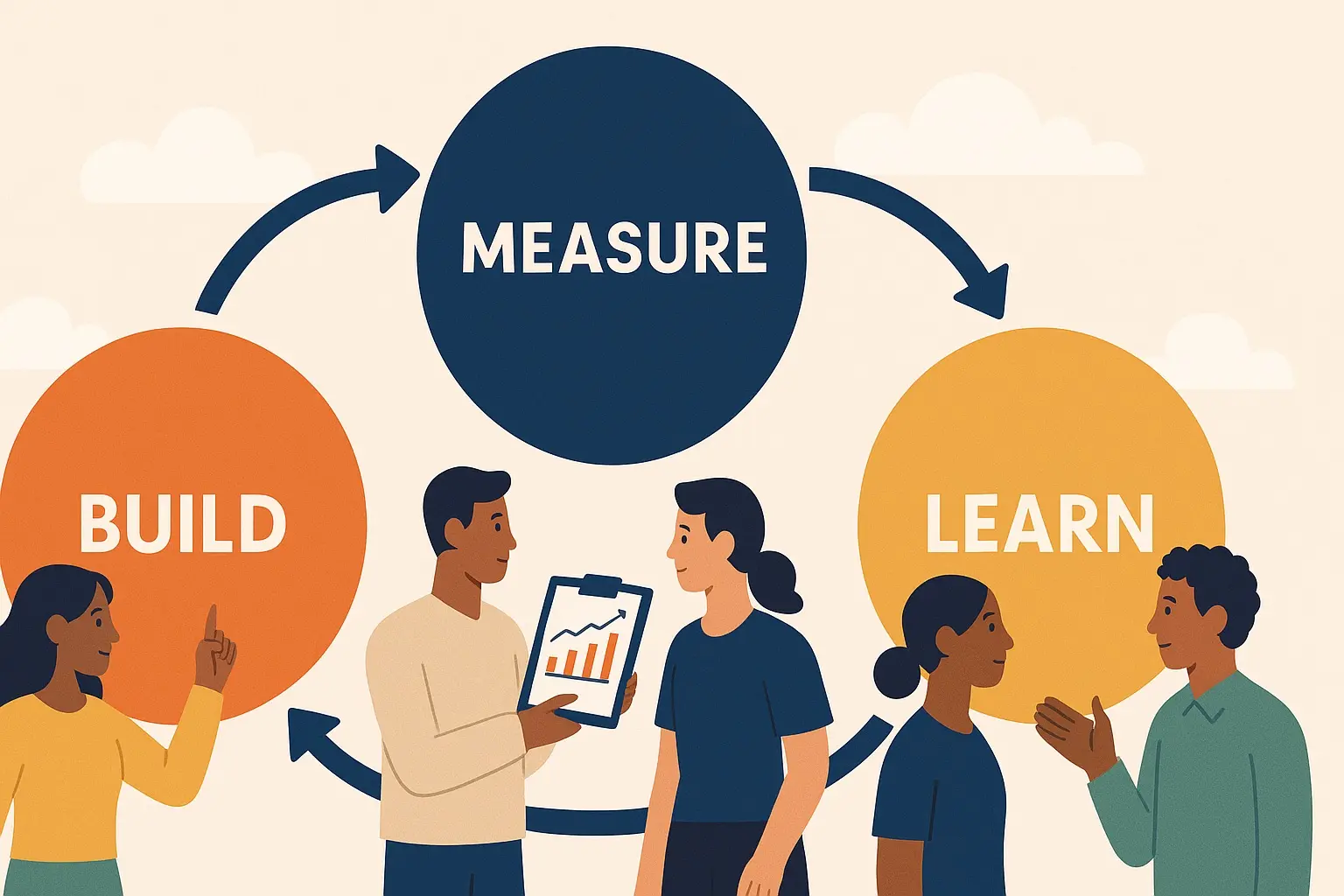
Eric Ries introduced this concept to help entrepreneurs avoid costly mistakes. The methodology emphasizes rapid experimentation over detailed planning. You build, measure, and learn continuously.
Think of it as scientific experimentation for your business. Each test provides valuable data about your customers and market. This data guides your next steps.
Furthermore, this approach reduces waste significantly. You won't spend months building features nobody wants. Instead, you'll invest time and money wisely from day one.
The Build-Measure-Learn Cycle
The heart of lean startup methodology lies in the build-measure-learn cycle. This three-step process drives everything you do as a lean startup founder.
First, you build a minimum viable product or test. This could be a simple landing page or a basic prototype. The goal is to create something testable quickly.
Next, you measure how customers respond to your creation. You track specific metrics that matter to your business. These measurements provide objective feedback about your assumptions.
Finally, you learn from the data you've collected. You analyze what worked and what didn't. This learning informs your next build phase.
The cycle then repeats with your new insights. Each iteration brings you closer to product-market fit. Speed and frequency matter more than perfection in the early stages.
Creating Your Minimum Viable Product
Your minimum viable product represents the simplest version of your idea. It includes only the core features needed to test your main hypothesis. Nothing more, nothing less.
Many founders struggle with this concept initially. They want to build something impressive and feature-rich. However, your MVP should feel almost embarrassingly simple.
Start by identifying your riskiest assumption about customers. Then design an MVP that tests this assumption directly. Remove every feature that doesn't serve this purpose.
Your MVP might be a mockup, a landing page, or a manual service. The format matters less than the learning it generates. Focus on validating or invalidating your core beliefs.
Remember, your MVP is not your final product. It's a learning tool that helps you understand your market better. Embrace its simplicity and imperfection.
Validated Learning Through Customer Feedback
Validated learning transforms opinions into facts through real customer interactions. Instead of assuming what people want, you ask them directly and observe their behavior.
Start by talking to potential customers before building anything. Ask about their problems, current solutions, and frustrations. Listen more than you speak during these conversations.
When you release your MVP, pay attention to how people actually use it. Their actions often contradict what they say in surveys. Behavior reveals true preferences and needs.
Additionally, track both qualitative and quantitative feedback. Numbers show you what's happening, while stories explain why it's happening. Both perspectives provide valuable insights.
Document everything you learn in a systematic way. Create a feedback log that captures patterns and themes. This documentation helps you make informed decisions about pivoting or persevering.
Making Data-Driven Pivot Decisions
Pivoting means changing your strategy while keeping your vision intact. It's not failure; it's intelligent adaptation based on what you've learned about your market.
The lean startup methodology encourages pivoting when evidence suggests your current approach won't work. However, you need solid data to support this decision.
Look for consistent patterns in your customer feedback and metrics. If multiple data sources point in the same direction, consider a strategic change. Single negative reviews don't justify major pivots.
Several types of pivots exist within the lean startup framework. You might change your target customer, core feature, or business model. Each pivot should address specific problems you've identified.
Before pivoting, ensure you've given your current approach enough time and testing. Premature pivoting can be as dangerous as stubborn persistence. Balance patience with responsiveness to data.
Implementing Lean Principles in Daily Operations
Lean startup methodology extends beyond product development into every aspect of your business. Apply these principles to marketing, hiring, and operational decisions, too.
Create small experiments for each business function. Test different marketing channels with limited budgets before committing significant resources. This approach minimizes risk while maximizing learning.
Hire slowly and deliberately in the early stages. Each new team member should solve a specific, validated problem. Avoid hiring based on assumptions about future needs.
Moreover, question every process and expense regularly. Ask whether each activity contributes to learning or growth. Eliminate anything that doesn't serve these core objectives.
Keep detailed records of what works and what doesn't. This documentation becomes invaluable as you scale and need to train new team members.
Measuring What Matters Most
Effective measurement distinguishes successful lean startups from struggling ones. Focus on metrics that directly relate to your business model and customer behavior.
Avoid vanity metrics that make you feel good but don't predict success. Social media followers and website visits mean nothing without corresponding business outcomes.
Instead, track actionable metrics that influence your decision-making. These might include customer acquisition cost, lifetime value, or conversion rates. Choose metrics that guide specific actions.
Establish baseline measurements before making changes. Without baselines, you can't determine whether your experiments improve or harm your business performance.
Review your metrics regularly but not obsessively. Weekly or monthly reviews provide enough frequency for most early-stage startups. Daily metric checking can lead to premature conclusions.
Building a Culture of Continuous Learning
Lean startup methodology succeeds when learning becomes part of your company culture. Every team member should embrace experimentation and feedback as normal business practices.
Encourage your team to admit when assumptions prove wrong. Create an environment where changing direction based on data feels rewarding rather than embarrassing.
Share learning across your entire organization regularly. Hold weekly meetings where team members discuss recent experiments and insights. This practice accelerates collective learning.
Furthermore, celebrate intelligent failures as much as obvious successes. Teams that fear failure stop experimenting and learning. Your culture should reward thoughtful risk-taking and honest reporting.
Document lessons learned in accessible formats. Create a knowledge base that new team members can reference. This documentation prevents repeating past mistakes.
Scaling Beyond the Startup Phase
As your startup grows, lean principles remain valuable but require adaptation. Larger organizations need more structure while maintaining experimental mindsets.
Maintain small, autonomous teams that can move quickly and test ideas. Bureaucracy kills the speed and flexibility that make lean methodology effective.
Invest in systems that support rapid experimentation at scale. Better analytics tools and testing infrastructure enable more sophisticated learning as you grow.
However, don't abandon the core principles that brought you success. Continue prioritizing customer feedback and data-driven decision-making throughout your journey.
The lean startup methodology provides a framework, not a rigid rulebook. Adapt these principles to fit your unique situation while staying true to the underlying philosophy of learning and adaptation.
Ready to Move Faster?
Get actionable feedback and insights on your challenges and goals. 30 minutes focused on helping you move forward.
No sales pitch. No obligations. Just helpful advice.